
The Quantum Menace To Bitcoin Human Rights Foundation
Whereas the variety of addresses potentially susceptible is unknown and likely fairly low, quantum computer systems may doubtlessly widen the scope of vulnerable addresses. Bitcoin wallets today no longer support the P2PK tackle sort, and sometimes don’t reuse addresses. However, if your wallet has reused its tackle or uses the P2TR handle sort, you presumably can shield your funds from a possible https://www.travelmaxallied.com/journey-statistics-for-tour-operators.html long-range quantum assault by migrating your bitcoin to a new wallet that does not reuse addresses.

Current estimates counsel that breaking Bitcoin’s cryptographic safety would require tens of millions to billions of secure qubits — far beyond current capabilities. The announcement comes as leading quantum computing firms accelerate their timelines for cryptographically relevant quantum computers (CRQCs). Current business roadmaps project reaching a million qubits by 2030, whereas quantum researchers are demonstrating substantial reductions in required quantum resources for breaking encryption. With over 6.65 million Bitcoin ($745 billion at present prices) instantly attackable as a outcome of completely uncovered public keys, the whole value of the Bitcoin community is weak to quantum threats. BTQ’s release represents a critical milestone in securing the world’s largest cryptocurrency. BTQ’s release represents a crucial milestone in securing the world’s largest cryptocurrency.
Post-quantum Cryptography: Securing Blockchain Methods

However for the remaining 1.72 million bitcoin ($188 billion), for which owners’ non-public keys are thought to be no longer accessible, no such migration would occur. These dormant coins, many relationship back to Bitcoin’s earliest days, can be left uncovered in a post-quantum world. Satoshi’s estimated 1.1 million BTC (worth over $130 billion), for example, reside in pay-to-public-key (P2PK) addresses with uncovered public keys. Active users with funds in older or reused addresses can move their bitcoin to a model new, quantum-safe tackle and defend their funds by by no means sharing or re-using that public key. While this migration will necessitate intensive technical development and consumer training, the solution is technically possible, and will secure the majority (4.forty nine million) of the estimated bitcoin at risk.
Why Migrating Bitcoin’s Blockchain For Quantum Security Is Challenging
- The urgency stems from the fact that quantum computers are quickly advancing; proactive measures are crucial to mitigate future risks and prevent large-scale theft.
- Some express considerations that the theft of hundreds of thousands of bitcoin could undermine the value of the foreign money, affecting all holders of the currency, not solely these whose bitcoin is stolen.
- The Java Native Interface (JNI) can be required along with guaranteeing that compatible OpenQuantum Safe (an open-source venture) Liboqs libraries are put in.
- This isn’t a future concern; regulatory our bodies in the US and Europe are already pushing for quantum-safe frameworks within the crypto asset administration space.
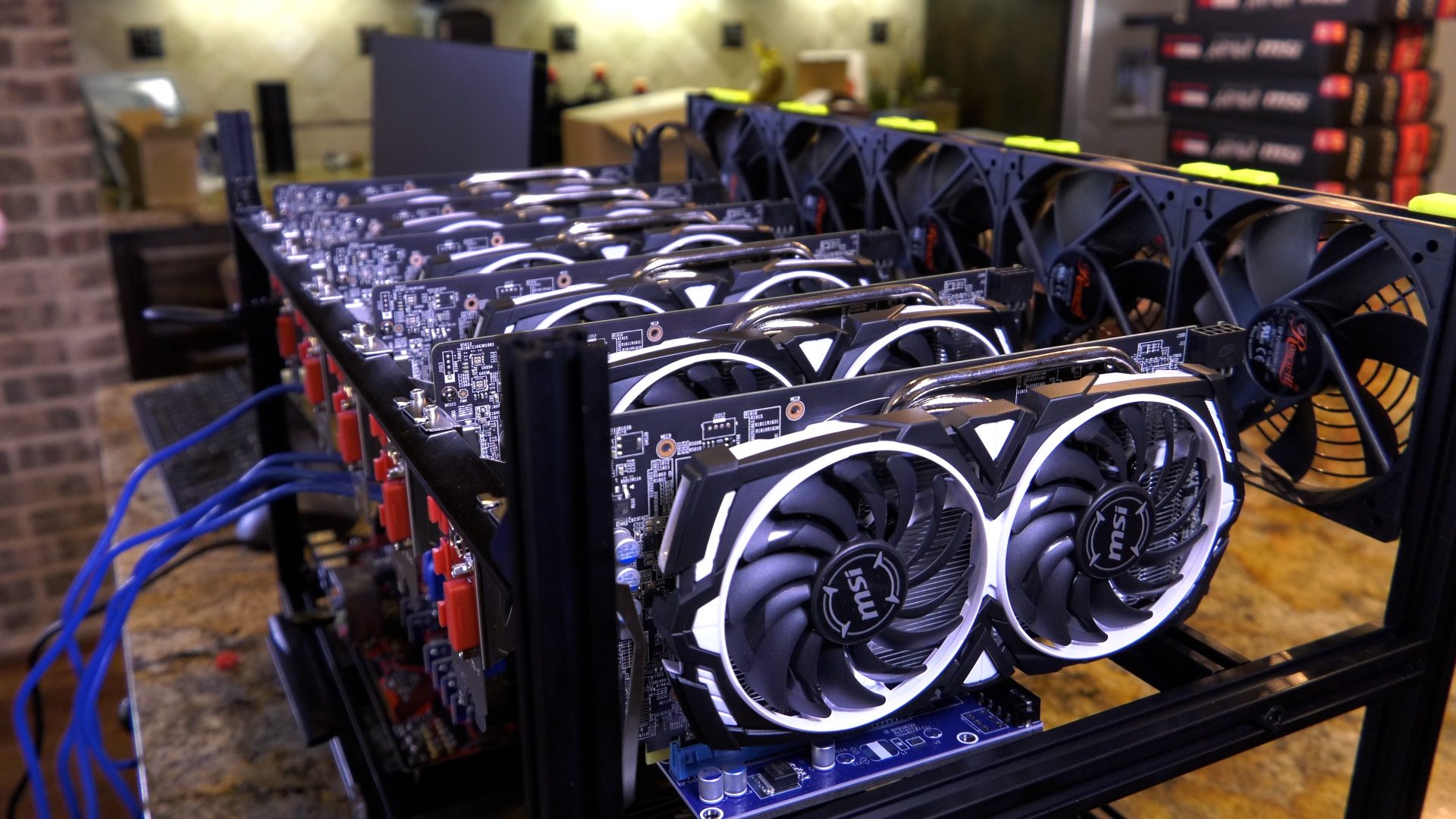
Post-Quantum Cryptography encompasses a brand new era of algorithms for the creation of uneven keys that are thought to be immune to assaults by quantum computers23. Practical defenses against future quantum threats focus on migrating susceptible funds, adopting post-quantum addresses, or managing existing dangers. In follow, quantum computing doesn’t at present pose an imminent or long-term risk to Bitcoin mining. For quantum computer systems to compete with the present network of mining rigs, they would have to be produced at an unlimited scale—something far past what is feasible in the foreseeable future. Furthermore, quantum computer systems require substantial vitality for cooling and operation, making them highly cost-inefficient as mining devices. Roughly 1.72 million BTC are held in P2PK addresses, while one other 4.9 million BTC are saved in reused addresses of different varieties.
Quantum-secure Signatures
Markets would begin reacting earlier than anybody ever confirmed that a quantum assault was happening. A quantum-enabled thief would begin by scanning the blockchain for any address that has ever revealed a public key. Old wallets, reused addresses, early miner outputs, and heaps of dormant accounts fall into that category.
Key Takeaways
As we argue in our paper, PQC represents a well-understood path to post-quantum blockchain security, underwriting confidence in the long-term viability of cryptocurrencies and the digital financial system in a world with CRQCs. We provide examples of post-quantum blockchains and experimental PQC deployments on in any other case quantum-vulnerable blockchains. We notice that whereas viable options like PQC exist, they may take time to implement, bringing increasing urgency to act. The cryptographic basis of most cryptocurrencies depends on mathematical problems which would possibly be computationally difficult for classical computers to unravel. Bitcoin and Ethereum, for instance, use elliptic curve cryptography (ECC) and the Secure Hash Algorithm (SHA-256), which rely upon the difficulty https://www.23ch.info/overwhelmed-by-the-complexity-of-options-this-may-help/ of fixing discrete logarithm problems and discovering hash collisions.